No heat in winter
A furnace, boiler, or heat pump that quits in January is the most urgent call received. Describe the symptoms and the checks are talked through before a visit is arranged.
An HVAC emergency in Denver is usually no heat in a cold snap: a furnace that quit, a heat pump iced over, a boiler that will not fire. In summer it is no cool. Call (720) 806-7634 at any time, day or night, and describe what is happening.
Call (720) 806-7634 at any hour and describe the failure. Lion Tech Home Services answers around the clock and talks through what happens next.
Call Now (720) 806-7634 → Open 24 hours · 7 days a week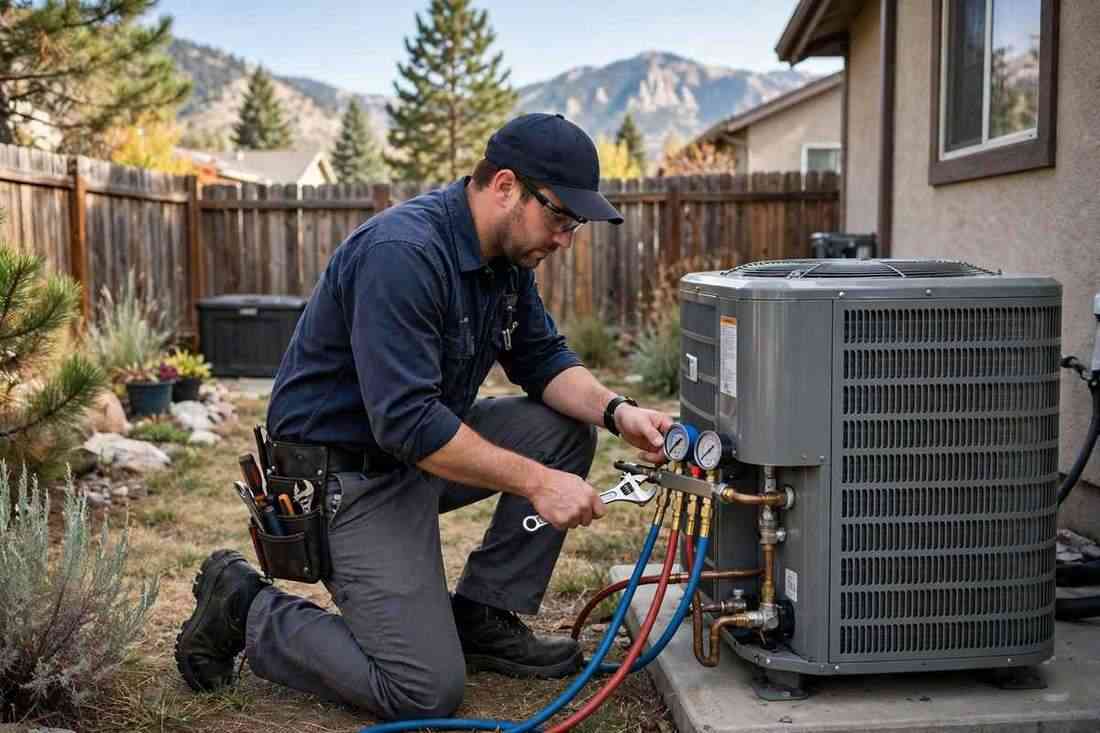
An HVAC emergency is a heating or cooling failure that leaves a home unsafe or unlivable: no heat in winter, no cool in a heat wave, a gas smell, or a carbon monoxide alarm. This page is the starting point, routing each situation to the right repair and, for gas or carbon monoxide, to the right emergency action first.
A gas smell means leaving the house and calling 911 and the gas company from outside, without staying to find the leak and without flipping switches. A carbon monoxide alarm means getting everyone outside into fresh air and calling emergency services. Those two situations come before any HVAC call. For the rest, no heat, no cool, water leaking from a unit, a system that will not start, call and describe it.
An emergency call covers the failed system and the safety checks around it.
No heat, a furnace that will not start, or one that shuts off and will not stay running. The furnace repair page carries the details of what is tested.
No cool in a heat wave, an AC that trips the breaker, or water leaking from the indoor unit. The air conditioning repair page carries the details.
A boiler that will not fire, radiators gone cold, or a leak at the boiler. The boiler repair page carries the details of what is tested.
A heat pump blowing cold air, iced over, or not running at all. The heat pump repair page carries the details.
A gas smell means leaving the house and calling 911 and the gas company from outside. Nobody stays inside, and no phones or switches are used in the house.
A carbon monoxide alarm means getting everyone outside into fresh air and calling emergency services. Nobody goes back inside until told it is safe.
Say what failed, when it started, and what the system is doing now. Gas smells or alarms are asked about first, because those change the answer.
With a gas smell or a carbon monoxide alarm sounding, the instruction is to leave the house and call 911 and the gas company before anything else.
For a heating or cooling failure, the thermostat, the breakers, and the filter are asked about, the simple checks that sometimes explain it.
A visit is arranged and advice is given for the wait, such as keeping pipes from freezing or keeping the house ventilated.
The system is tested, the fault is explained, the repair is made, and the system is run to confirm it holds before the visit ends.
Testing instruments that find the fault fast, when the house is cold or hot and time matters.
Reads power, controls, and safety circuits quickly to find electrical faults.
Reads refrigerant pressures on AC and heat pump calls to separate a leak from a control fault.
Checks burner operation and venting on gas furnace and boiler calls.
Supply and return readings confirm whether the system is moving heat or just moving air.
Checks gas and refrigerant connections for leaks before the system is run again.
Sees into tight spots around the equipment when the fault is not obvious.
A furnace quit on a cold night and the house temperature was falling. The family called, described the symptoms, and kept the taps dripping while they waited.
Testing found a failed igniter. Once replaced, the furnace fired and the house warmed back up through the night.
An AC stopped cooling during a heat wave and the indoor temperature climbed into the 80s. The outdoor unit hummed but the fan did not turn.
A failed capacitor was the cause. With it replaced, the fan ran and the house cooled again.
A boiler would not fire and the radiators went cold. The house had no other heat, and the temperature was dropping.
A faulty control was found and replaced, the boiler fired, and the radiators warmed through the house.
Emergencies are the failures that cannot wait for a weekday. These are the calls that come in most.
Ask a pro →A furnace, boiler, or heat pump that quits in January is the most urgent call received. Describe the symptoms and the checks are talked through before a visit is arranged.
An AC or heat pump that stops cooling as the temperature climbs is the summer equivalent. Describe what the system is doing on the call.
Water around the indoor unit usually means a blocked condensate drain or a frozen coil. Switch the system off and call, since standing water damages floors fast.
A system dead at the thermostat may be power, controls, or a safety switch. Testing proceeds in order rather than guessing at parts.
Lion Tech Home Services handles emergency heating and cooling for Denver homes from 7575 E 29th Pl #4052, around the clock.
Google reviewers give Lion Tech Home Services 5.0 stars across 11 reviews.
“Martin does great work, is very transparent about costs, and most importantly backs up his work and will double back if needed without a question. I'll absolutely be using Lion Tech again when I need help around my homes.”
Dominic EastGoogle review
✓ VerifiedLeave the house right away and call 911 and the gas company from outside. Do not stay inside to find the leak, and do not flip light switches or use a phone inside the house.
Get everyone outside into fresh air and call emergency services. Do not go back inside until told it is safe.
Yes. A home without heat in a Denver winter can drop to unsafe temperatures and risk frozen pipes. Call (720) 806-7634 at any time and describe what is happening.
Check the thermostat setting, the breakers, and the filter. With a gas smell or a carbon monoxide alarm sounding, skip the checks, leave the house, and call 911 first.
Call (720) 806-7634 at any time, day or night. Describe what is happening and Lion Tech Home Services will talk through the next step. With a gas smell or a carbon monoxide alarm sounding, leave the house and call 911 first.
Call (720) 806-7634 →Lion Tech Home Services, Denver — call (720) 806-7634, open 24 hours.