Why Is My Furnace Blowing Cold Air in Winter?
Furnace blowing cold air in winter? Denver homeowners face altitude, dry air, and hard temperature swings. Here is why it happens and how to fix it.
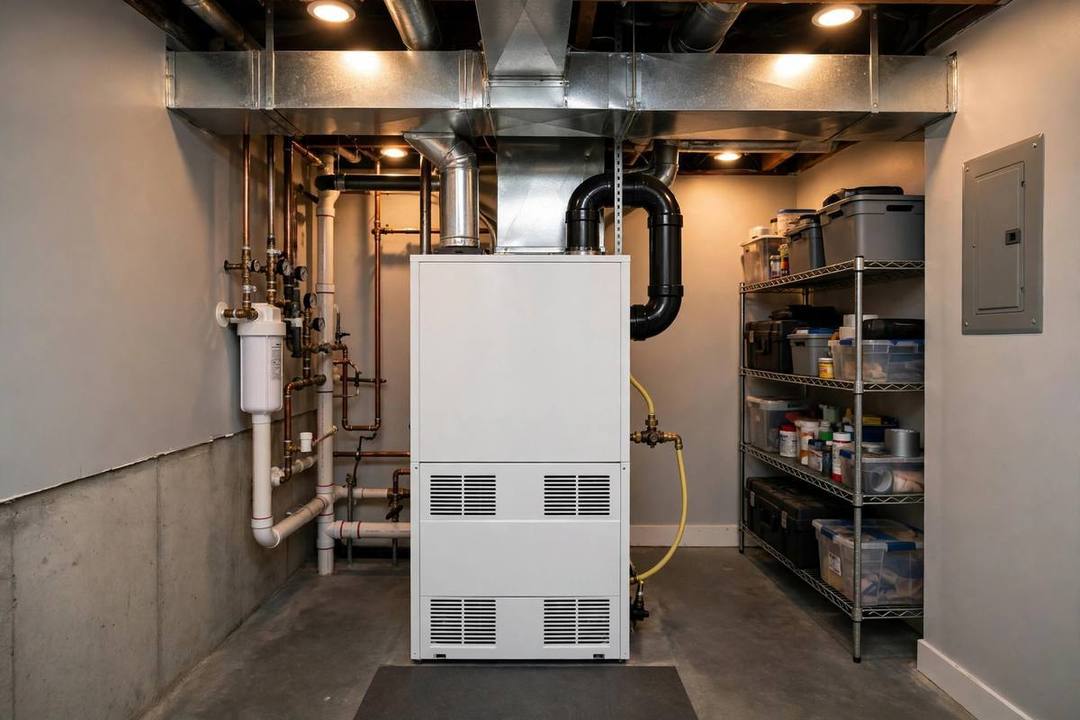
Your furnace is blowing cold air in winter because the burner isn't lighting, the flame sensor is dirty, the thermostat fan is set to ON instead of AUTO, or the system is overheating and shutting down the burners while the blower keeps running. In Denver, altitude and dry air make several of these failures more common than they are at sea level.
We're Lion Tech Home Services, and we run these calls across Denver all winter. Below you'll find the real causes, the fixes you can try yourself, and the point where it makes more sense to have a technician look at it.
The short answer: why your furnace blows cold air
A furnace blowing cold air in winter is a heating system that is running its blower but not producing heat, which usually means the ignition sequence failed or the safety controls locked the burners out. The blower keeps moving air because the fan is on a separate circuit from the burner.
The most common causes we see, in order of frequency:
- Thermostat fan switch set to ON instead of AUTO
- Dirty or failed flame sensor
- Clogged air filter choking airflow
- Pilot or electronic ignition failure
- Gas valve or control board fault
- Limit switch tripping from overheating
If your furnace is blowing cold air in Denver winter, the fastest diagnostic is to watch the furnace for 90 seconds after the thermostat calls for heat. You should hear the inducer motor, then see the igniter glow, then hear the burners light. If any of those steps is missing, that's your answer.
Thermostat and fan settings that cause cold air
The thermostat is the first thing to check because it's the cheapest fix and the most common cause. If the fan switch is set to ON, the blower runs continuously - even when the burners aren't firing - so you feel cold air moving through the vents all day.
Set the fan to AUTO. In AUTO, the blower only runs when the furnace is actually heating. That single change fixes a surprising number of "furnace blowing cold air" calls before we even arrive.
Next, check the mode. If the thermostat is set to COOL or the batteries are dead, the system may run the fan without heat. Replace the batteries, confirm the mode is HEAT, and set the target temperature at least 3 degrees above the current room temperature so the call for heat is unambiguous.
Programmable and smart thermostats add one more wrinkle: a schedule that drops the temperature overnight can make the house feel cold at 6 a.m. even though the furnace is working correctly. If your system is a heat pump, expect 10 to 15 minutes of lukewarm air at the start of each cycle - that's normal defrost behavior, not a failure.
Ignition and flame sensor problems
If the thermostat is correct and you still get cold air, the problem is almost always in the ignition sequence. A furnace that tries to light three times and then locks out is telling you the flame sensor isn't proving the flame.
The flame sensor is a thin metal rod that sits in the burner flame. It sends a tiny current back to the control board to confirm the burners are lit. When it's coated with carbon or oxidation, the board can't read the signal, so it shuts the gas valve off within 3 to 7 seconds - and the blower keeps running, pushing cold air through your house.
We clean flame sensors on nearly every Denver furnace tune-up. It takes about 10 minutes with fine steel wool, and it's the single most common reason a furnace lights and then immediately quits.
Other ignition failures we see:
- Hot surface igniter cracked or burned out (reads open on a multimeter)
- Standing pilot blown out on older units
- Dirty burners with blocked ports
- Gas valve not opening - you'll hear the click but no flame
- Pressure switch stuck open from a blocked flue or condensate line
If you smell gas at any point, stop. Leave the house and call 911 or Xcel Energy's emergency line before calling anyone else.
Airflow and duct issues in Denver homes
Restricted airflow causes a furnace to overheat, trip its high-limit switch, and shut the burners off while the blower continues running. That's the classic "cold air from the vents" pattern in older Denver homes.
The first culprit is the air filter. A clogged filter forces the furnace to work harder and raises the temperature inside the heat exchanger past the limit switch threshold - usually 150 to 200 degrees Fahrenheit. Change your filter every 1 to 3 months. In dusty Denver neighborhoods, lean toward monthly.
Duct problems are the second culprit. Leaky or disconnected ducts in a crawlspace or attic can dump 20 to 30 percent of your heated air before it reaches a room. If one room is always cold while the rest of the house is fine, that's a duct problem, not a furnace problem.
We see this constantly in older housing stock. Homeowners searching for duct sealing Denver CO are usually dealing with exactly this pattern - a furnace that runs fine but can't get heat to the far end of the house. Sealing and balancing the ducts often solves the cold-air complaint without touching the furnace at all.
Also check your return air grilles. Furniture, rugs, and closed interior doors can starve the system of return air, which produces the same overheating cycle.
Denver winter furnace problems that are altitude-specific
Denver sits at 5,280 feet, and that altitude changes how a furnace burns. Gas furnaces are derated roughly 4 percent per 1,000 feet above sea level, which means a furnace rated at 100,000 BTU at sea level produces closer to 80,000 BTU here.
If your furnace was sized for sea-level conditions, it may be undersized for a Denver winter. During a cold snap - and Denver gets stretches below 10 degrees Fahrenheit every January and February - an undersized furnace runs constantly and never catches up. The air at the register feels cool because the system can't keep up with the heat loss.
Altitude also affects the air-fuel mixture. Furnaces installed at altitude need the correct orifice size and manifold pressure. A unit set up for sea level will burn rich, soot up the heat exchanger, and trip the flame sensor repeatedly.
Denver's dry air adds another factor. Indoor humidity in January often drops below 20 percent, and dry air feels colder at the same temperature. A furnace that's working perfectly can still feel like it's blowing cold air when the house is bone dry. Whole-home humidification and indoor air quality services Denver CO address that comfort gap directly.
If you're in an older neighborhood with original 1920s to 1950s ductwork, this is the time of year it shows its age. Homeowners in furnace repair Denver CO calls around Washington Park and similar historic districts often find that the furnace is fine but the ducts and returns were never sized for a modern system.
Common mistakes homeowners make
We see the same handful of mistakes every winter, and most of them make the problem worse.
- Running the fan on ON all winter. This pushes cold air whenever the burners are off. Use AUTO.
- Ignoring the filter. A fresh filter change prevents most limit-switch lockouts.
- Resetting the furnace repeatedly. If it locks out three times, the control board is telling you something is wrong. Stop cycling it and diagnose.
- Blocking return air. Don't push furniture against return grilles or close every interior door.
- Assuming a cold room means a bad furnace. It usually means a duct or balancing problem.
- DIY gas work. Cleaning a flame sensor is fine. Opening a gas valve or heat exchanger is not.
One more: don't trust a thermostat reading from a hallway that gets direct afternoon sun. Move the thermostat or use a remote sensor if the reading is off by more than 3 degrees from the rest of the house.
When to call a professional
Call a technician if the furnace locks out three times in a row, if you smell gas, if the heat exchanger shows cracks or rust, or if the furnace runs but never reaches the set temperature after 30 minutes.
At Lion Tech Home Services, we diagnose the ignition sequence, test the flame sensor signal, check manifold pressure against altitude specs, and inspect the heat exchanger before we recommend anything. Most cold-air calls are resolved in a single visit - a flame sensor cleaning, a filter change, a thermostat correction, or a gas valve replacement.
If your furnace is 15 years or older and has needed two or more repairs in the last three winters, replacement usually costs less over the next five years than continuing to patch it. We'll give you the numbers and let you decide.
Frequently Asked Questions
Why is my furnace blowing cold air in Denver winter?
The burner isn't lighting or is shutting off within seconds of lighting. The most common causes are a dirty flame sensor, a thermostat fan set to ON, a clogged filter, or an ignition failure. Denver's altitude can also make an undersized furnace run constantly without keeping up.
What causes a furnace to blow cold air in Denver?
In Denver specifically, altitude derating, dry indoor air, and older ductwork are the three factors we see most. A furnace set up for sea level will burn poorly at 5,280 feet, and 1920s-era ducts in neighborhoods like Washington Park often can't deliver heat to the far rooms.
How do I fix a furnace blowing cold air in Denver CO?
Set the thermostat fan to AUTO, replace the air filter, and check that the mode is HEAT. If the furnace still blows cold, watch the ignition sequence for 90 seconds. If the burners don't light, the flame sensor or igniter needs service - that's a technician job.
Who do I call for furnace blowing cold air in Denver?
Call a Denver HVAC company that services your furnace brand and can respond in winter. Lion Tech Home Services handles cold-air diagnostics across Denver, including Washington Park, Capitol Hill, and the surrounding metro.
Get help with Hvac in Denver
If your furnace is blowing cold air and you've already checked the thermostat and filter, we can get heat back on today. We serve Denver and the surrounding metro with diagnostics and a clear written scope.
Call Lion Tech Home Services at (720) 806-7634.