Why Is My Boiler Leaking Water From the Bottom?
Why is your boiler leaking water from the bottom? Denver homeowners: find the likely cause, what to check first, and when to call a pro before damage spreads.
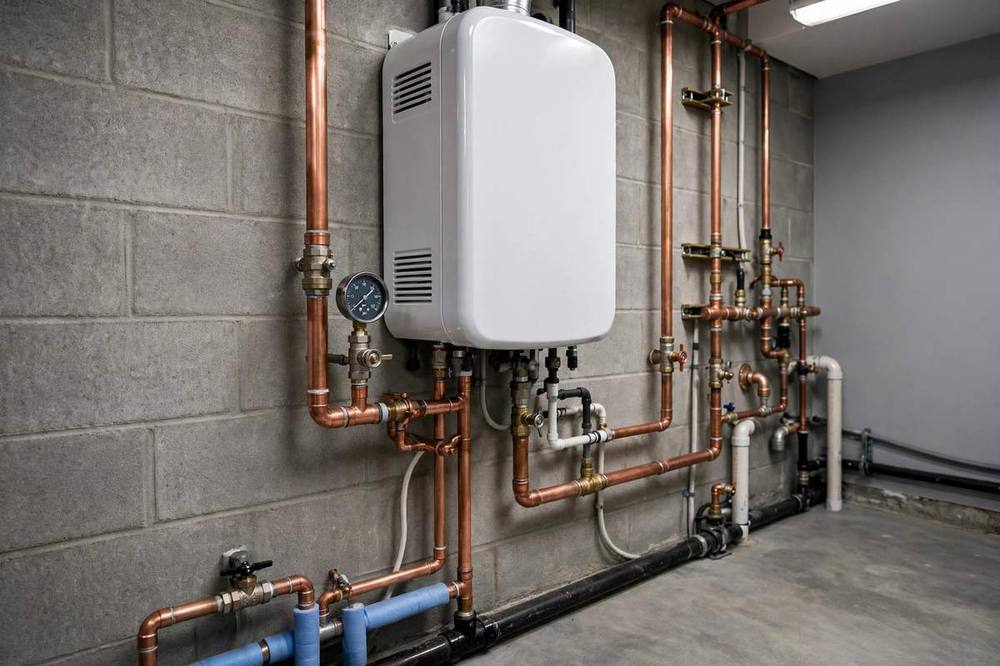
A boiler leaking water from the bottom is almost always one of four things: a pressure relief valve that opened because system pressure climbed too high, a corroded or cracked boiler tank, a failed gasket or seal, or a loose fitting on the return line. The leak itself is a symptom - the real problem is whatever pushed the water out. If you live in Denver, the cause is often tied to our altitude, our hard water, or a heating system that has run 20 winters without a proper service.
Below we walk through each cause, how to trace the source in about ten minutes, what repairs cost in 2026, and the point where a leaking boiler stops being a DIY job. We're Lion Tech Home Services, and we've opened up enough basement boilers along the Front Range to know which leaks are cheap and which ones mean a replacement.
The short answer: what a bottom leak usually means
Why is my boiler leaking water from the bottom in Denver? Because water is escaping from the lowest point it can reach - and on a boiler, that's the relief valve discharge pipe, the tank seam, or a fitting on the bottom manifold. A boiler is a pressurized closed loop, so any leak at the bottom means pressure is finding a way out.
Boiler leaking water from the bottom is a plumbing-and-heating failure that needs diagnosis promptly, because a small drip can turn into a flooded basement floor or a cracked heat exchanger. The good news: roughly half the bottom leaks we see are relief valve issues, and those are the cheapest to fix.
One number matters more than any other here. A residential boiler in Denver should hold steady between 12 and 18 psi when cold. If your gauge is sitting at 25 psi or higher, the leak is a pressure problem, not a tank problem.
What causes a boiler to leak in Denver CO
What causes a boiler to leak in Denver CO comes down to pressure, corrosion, and connections - and Denver's water and altitude push on all three. Here's what we actually find when we pull the panels off.
1. A pressure relief valve doing its job
The relief valve is a safety device set to open around 30 psi. When it opens, water exits through the discharge pipe and lands on the floor under the boiler. Homeowners see a puddle and assume the tank failed. Usually the valve is fine - something else raised the pressure.
Common culprits: a failed pressure-reducing valve feeding too much city water in, a bad expansion tank that can no longer absorb thermal expansion, or a fill valve left open. Denver's incoming water pressure runs high in many neighborhoods, so a worn reducing valve is a frequent find.
2. A corroded tank or cracked section
If water is weeping from the tank body itself - not a pipe, not a valve - the boiler is usually done. Cast iron sections corrode from the inside out, and once a section cracks, no sealant fixes it. Denver's hard water accelerates mineral scale, which traps heat and stresses the metal.
This is the leak that ends in replacement. A tank leak on a boiler older than 15 years is almost never worth repairing.
3. Failed gaskets, seals, and O-rings
Circulator pumps, zone valves, and low-water cutoffs all have gaskets that harden over time. A worn pump gasket can drip a quart a day. These leaks usually show up as a trail of water running from a component down to the bottom of the unit, which makes them look like bottom leaks.
4. Loose or corroded fittings on the return line
The return line enters low on the boiler, and those threaded or soldered joints take stress from expansion and contraction every heating cycle. A fitting that was snug in October can weep by January. This is common in older Denver homes where the boiler was installed decades ago and the piping has been repaired piecemeal.
How to find the source before you call anyone
Finding the source before you call anyone takes about ten minutes and saves you diagnostic time. Do this with the boiler off and cool.
- Dry everything. Towel off the floor, the tank, and every pipe. Wait 20 minutes with the system off, then look again.
- Check the relief valve discharge pipe. If water is coming out of that copper pipe, the valve opened - the problem is pressure, not the tank.
- Follow the drip upward. Water runs down. Trace the wet path from the floor back up to the highest wet point.
- Look at the gauge. Cold pressure above 20 psi points to a fill or expansion problem.
- Inspect the tank seams. Rust streaks or weeping at the section seams mean the boiler itself is failing.
If you're in a tight basement or a mechanical closet and can't get a clear look, that's normal - most of the boilers we service in boiler repair Denver CO are wedged into spaces that were never designed for maintenance access.
Common boiler leaks in Denver CO and what each one means
Common boiler leaks in Denver CO fall into a predictable price ladder, and knowing the range keeps you from overpaying. Here's what typical 2026 pricing looks like for the repairs we do most.
- Relief valve replacement: a new valve and a pressure check.
- Expansion tank replacement: the work depends on the size of the tank and how easy it is to reach.
- Pressure-reducing (fill) valve: the valve that controls the water coming into the system.
- Circulator pump gasket or seal: a small part that can leak a lot of water.
- Return-line fitting repair: a fitting that has worked loose or corroded.
- Full boiler replacement: the option when the tank or a section is cracked.
The pattern is clear: everything except a tank failure is a few hundred dollars. That's why we always check the cheap causes first. If your boiler is leaking in Lincoln Park Denver or any of the older neighborhoods with original 1920s piping, expect the fitting and valve work to be the likely fix rather than a new boiler.
Altitude matters too. Denver sits at 5,280 feet, and boilers rated at sea level run differently up here - combustion settings and pressure behavior both shift. A boiler that was never derated for altitude can run hot and cycle pressure in ways that stress the relief valve.
What to watch out for
What to watch out for with a leaking boiler is the mistake of treating the puddle instead of the cause. A few traps catch homeowners every heating season.
- Don't keep adding water. Topping off a leaking system introduces fresh oxygen and minerals, which speeds corrosion. A leak plus constant refilling is how a repairable boiler becomes a replacement.
- Don't cap or plug the relief valve. That valve is the only thing standing between a pressure spike and a tank rupture.
- Don't ignore a slow drip. A quart a day sounds harmless until it's soaked the floor framing and grown mold behind the drywall.
- Don't trust a sealant product. Stop-leak additives can buy a week, but they clog narrow passages and often make the eventual repair more expensive.
We also see homeowners misread the source. Water on the floor near a boiler is sometimes condensate from a nearby furnace repair Denver CO job or a humidifier line, not the boiler at all. Confirm the boiler is the source before you spend money on it.
When to call a professional
Call a professional when the leak comes from the tank body, when pressure stays above 20 psi after you've checked the gauge, or when you can't trace the source in ten minutes. Those three situations need a trained eye and a pressure test.
We handles leaking boilers across the metro, and we start every visit by finding the actual source rather than guessing at parts. We check pressure, the relief valve, the expansion tank, and every fitting on the bottom manifold, then tell you what it costs before we touch a wrench. If the boiler is beyond repair, we'll say so plainly and walk you through boiler installation Denver CO options that fit your home and your budget.
For homeowners who want to stop the next leak before it starts, a seasonal boiler tune up Denver in early fall catches failing valves and weak expansion tanks while they're still cheap to fix. As a full-service Denver HVAC company, we handle the whole system - heating, cooling, and the piping in between.
Frequently Asked Questions
Why is my boiler leaking water from the bottom in Denver?
The most common cause is a pressure relief valve that opened because system pressure climbed above 30 psi, usually from a failed expansion tank or fill valve. Tank corrosion, gasket failures, and loose return-line fittings are the next most likely causes in Denver homes.
What causes a boiler to leak in Denver CO?
Denver's hard water and 5,280-foot altitude both stress boilers. Scale buildup traps heat and corrodes metal, while altitude changes combustion and pressure behavior. Aging gaskets and fittings account for most of the rest of the leaks we repair.
How do I fix a leaking boiler in Denver?
You can stop the leak temporarily by shutting off the water feed and power, then drying the area to find the source. Permanent repair depends on the cause - a relief valve or expansion tank is usually a quick fix, while a cracked tank means replacement.
Who repairs leaking boilers in Denver?
Call a heating contractor that services boilers specifically, not a general handyman. Lion Tech Home Services repairs leaking boilers across Denver and the Front Range, and we diagnose the source before quoting any parts.
Can I run my boiler with a small leak?
No. Even a slow drip introduces fresh water and oxygen into the system, which accelerates corrosion and can turn a small repair into a full replacement. Shut the boiler down and get it looked at promptly.
Get help with HVAC in Denver
A leaking boiler is a problem you can solve today. We'll find the source, fix it, and test the system before we leave - no guesswork, no parts thrown at it.
Call Lion Tech Home Services at (720) 806-7634 and we'll get your heat back on and your basement floor dry.