Preparing Your AC for Denver Summer Heat
Preparing your AC for Denver summer heat starts in spring. A Denver summer AC checklist: filter, coil, drain, thermostat and duct checks.
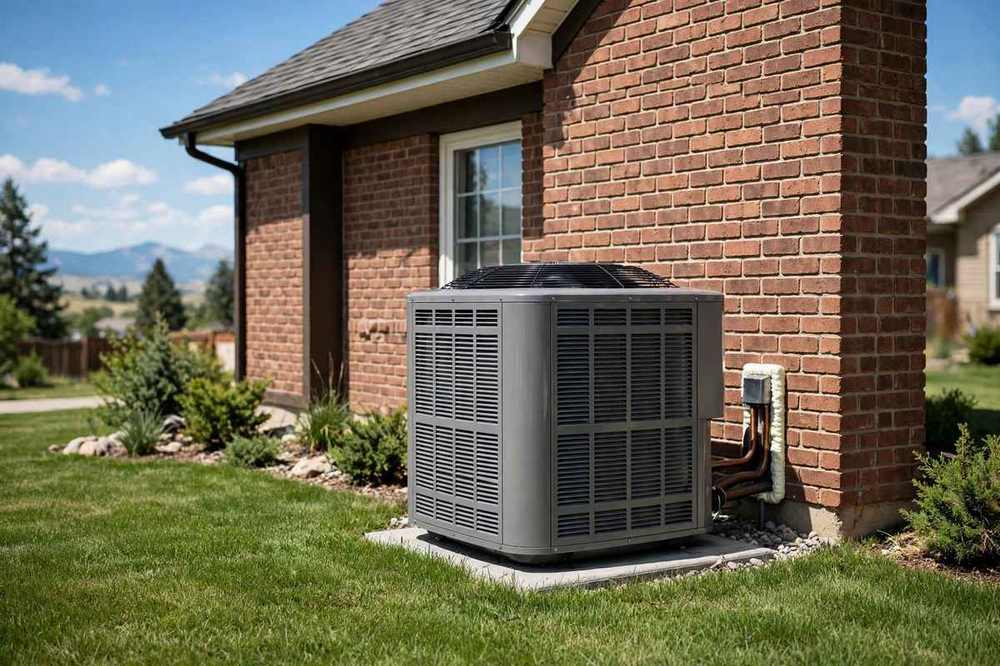
Preparing your AC for Denver summer heat means servicing the system in April or May - before the first 90°F day - by replacing the filter, cleaning the condenser coil, checking refrigerant charge, testing capacitors and contactors, and clearing the condensate line. Denver's swing from 45°F nights to 95°F afternoons forces an AC to work harder than in almost any other U.S. climate, and a system that sat idle since October usually has at least one weak part.
Below is the checklist we run on Denver homes each spring, what a tune-up covers, and the mistakes that turn a small service call into a compressor replacement.
Why Denver summers punish an unprepared AC
Denver's high-altitude, dry air and 30-degree daily temperature swings put more stress on an air conditioner than the coastal climates most AC units are engineered around. At 5,280 feet, air is roughly 17% thinner, so the condenser fan moves less heat per revolution and the compressor runs longer cycles to hit the same indoor temperature. Add a typical July afternoon of 95°F with 15% humidity and the system is running at the top of its design envelope for weeks.
Then there's the dust. Denver gets about 14 inches of precipitation a year, most of it in spring, and the wind that blows through the Front Range carries cottonwood fluff, pollen, and grit straight into outdoor condenser coils. A coil that's 30% blocked by debris can push head pressure up 40-60 psi, which is exactly how compressors fail in July. We see it every year in older neighborhoods where mature trees drop seed in late May and nobody rinses the unit until something breaks.
If you've been putting off service, our HVAC Denver CO service handles the full spring checklist in a single visit, usually in under 90 minutes.
When should you prepare your AC in Denver CO?
The right window to prepare your AC in Denver is the last two weeks of April through the end of May - roughly four to six weeks before the average first 90°F day, which lands around June 10. Book earlier if you can. HVAC companies in Denver fill their schedules by mid-May, and the homeowners who call on July 3 after a 98°F weekend are the ones waiting three days for a technician.
Here's the timing we recommend to customers:
- Late April: replace the filter, rinse the outdoor unit, and check the condensate drain.
- Early to mid May: schedule the professional tune-up - refrigerant check, electrical test, coil cleaning.
- Late May: run the system for 20 minutes on a warm afternoon to confirm it's cooling before you actually need it.
- June through August: swap the filter every 60-90 days and rinse the condenser coil monthly.
If you live in a condo or older home in air conditioning maintenance Denver CO territory - think Cheesman Park, Capitol Hill, or anywhere with shared walls and window units - the same schedule applies, but the coil cleaning matters even more because those systems pull air from tighter, dustier spaces.
The spring AC prep checklist for Denver homes
A proper spring AC prep in Denver covers 12 to 15 checkpoints on the indoor air handler, the outdoor condenser, and the refrigerant circuit. This is the list we work from, and it's the same list you can use to sanity-check any company you hire.
Outdoor condenser
- Power down the unit at the disconnect.
- Clear leaves, cottonwood seed, and grass clippings from the cabinet and coil fins.
- Rinse the coil from the inside out with a garden hose - never a pressure washer, which bends fins.
- Check that the unit sits level on its pad and has 24 inches of clearance on all sides.
- Test the fan motor and capacitor; a weak capacitor is the number-one cause of "AC won't start" calls in June.
Indoor air handler and filter
- Replace the filter - a 1-inch pleated MERV 8 is fine for most Denver homes; swap to MERV 11 if you have allergies or pets.
- Inspect the evaporator coil for dust buildup; a dirty indoor coil ices up and stops cooling.
- Flush the condensate drain line with a cup of white vinegar to prevent algae clogs.
- Check the drain pan for rust or cracks.
- Confirm the blower wheel is clean and the belt (if equipped) has correct tension.
Refrigerant and electrical
- Measure refrigerant charge with gauges - low charge means a leak, not just a top-off.
- Check the contactor for pitting and the wiring for heat damage.
- Test the thermostat against a calibrated thermometer; a 3-degree offset wastes energy all summer.
- Verify the disconnect box and breaker are sized correctly for the unit.
That's the full picture. If you'd rather have it done in one visit, our AC tune-up Denver CO service covers every item on this list and includes a written report on the system's condition.
What maintenance does your AC need before Denver summer?
The maintenance your AC needs before a Denver summer is a filter change, a condenser coil cleaning, a refrigerant charge check, an electrical component test, and a condensate drain flush - performed once in spring, then filter swaps every 60-90 days through the cooling season. Anything beyond that depends on the age and condition of your system.
If your AC is 10 years old or older, add two items: a hard-start kit evaluation (it helps an aging compressor start against high head pressure on 95°F afternoons) and a duct inspection. Denver homes built before 1980 - a big chunk of the housing stock in neighborhoods like Sunnyside, Baker, and Park Hill - often have ductwork that leaks 20-30% of cooled air into the attic or crawlspace before it reaches a register. Sealing those joints can cut the amount of cooled air you lose into the attic or crawlspace.
For homes with a heat pump instead of a straight AC, the spring checklist is similar but adds a reversing valve test and a defrost cycle check. Our heat pump maintenance Denver CO visits cover both, since a heat pump that ran all winter needs its cooling mode verified before June.
What an AC tune-up covers before Denver summer
A residential AC tune-up in Denver covers the full checklist above, a filter, and a written report. Multi-system homes or systems that have not been serviced in three-plus years can need a deep coil clean on top of that.
Here's what the other pieces cost if they come up:
- Filter (1-inch pleated): sold at any Denver hardware store; we carry common sizes on the truck.
- Capacitor replacement: a common electrical repair.
- Contactor replacement: a common electrical repair.
- Refrigerant leak search and repair: the work depends on where the leak is.
- Condensate drain clearing: a quick fix that prevents water damage.
- Duct sealing (whole home): a bigger job that pays back in even cooling.
Compare that with a compressor replacement or a full system replacement, and the case for a spring tune-up is obvious. If you're weighing repair versus replacement on an older unit, our air conditioning repair Denver CO service will tell you straight which one makes financial sense for your system.
Common mistakes we see every June
The most common mistake Denver homeowners make is waiting until the first hot week to turn the AC on - by then, every HVAC company in the metro is booked out three to five days. Turn the system on for 20 minutes in mid-May, on a day when it's above 70°F outside, and you'll find out about a problem while there's still time to fix it on your schedule.
Other mistakes we fix every season:
- Pressure-washing the condenser coil. It flattens the fins and blocks airflow worse than the dirt did. Use a garden hose.
- Running a MERV 13+ filter in a standard 1-inch slot. It starves the system of airflow and can freeze the indoor coil. Use MERV 8-11 unless your system was designed for higher.
- Topping off refrigerant without finding the leak. A system that's low on charge has a leak. Topping it off just delays the repair and stresses the compressor.
- Covering the outdoor unit for the winter and forgetting to uncover it. We find at least a dozen units every spring still wrapped in plastic, running hot.
- Ignoring the condensate line. A clogged drain line shuts the system down on a float switch - usually on the hottest day of the year.
None of these are expensive to prevent. All of them are expensive to fix after the fact.
When to call a professional
Call a professional if your AC is more than five years old, if it hasn't been serviced since last summer, if you see ice on the indoor coil or refrigerant lines, or if the system short-cycles - runs for a few minutes, shuts off, and repeats. Those are the four signals that a DIY filter swap won't solve the problem.
At Lion Tech Home Services, we run the full spring checklist on Denver homes and give you a straight answer on what needs fixing now versus what can wait until fall. We show you the readings, not just a bill. If you want the system checked before the June rush, book a visit in April or May - that's when we have the most availability and you have the most options.
Frequently Asked Questions
How do I prepare my AC for Denver summer?
Replace the filter, rinse the outdoor condenser coil with a garden hose, clear debris from around the unit, flush the condensate drain with vinegar, and run the system for 20 minutes on a warm May afternoon. Then schedule a professional tune-up to check refrigerant charge, capacitors, and electrical connections before June.
When should I prepare my AC in Denver CO?
Late April through the end of May is the right window - about four to six weeks before Denver's average first 90°F day around June 10. Book by early May; HVAC schedules in Denver fill up fast once the first hot week hits.
What maintenance does my AC need before Denver summer?
A filter change, condenser coil cleaning, refrigerant charge check, electrical component test, and condensate drain flush. Systems 10 years or older should also get a hard-start kit evaluation and a duct inspection, since older Denver homes often leak 20-30% of cooled air through duct joints.
Who can prepare my AC for summer in Denver?
A HVAC company with Denver-specific experience - the altitude and dust here stress systems differently than coastal climates. Lion Tech Home Services runs the full spring checklist on Denver homes, usually in under 90 minutes, with a written report on your system's condition.
What does an AC tune-up cover in Denver?
A single-system tune-up covers the checklist above. Deep coil cleaning or multi-system homes can need extra work. Either way, it is a small job next to a compressor replacement.
Get help with HVAC in Denver
Denver summers don't ease in - they arrive all at once, usually the second week of June. Get your AC checked before that happens and you'll spend the hot months comfortable instead of waiting on a repair list.
Call Lion Tech Home Services at (720) 806-7634 to schedule your spring AC prep in Denver. We'll run the full checklist, show you the readings, and tell you exactly what your system needs before summer.