How to Reset a Tripped Furnace Breaker Safely
Learn how to reset a tripped furnace breaker safely in Denver, why breakers trip in Colorado homes, and when to call a pro for furnace electrical problems.
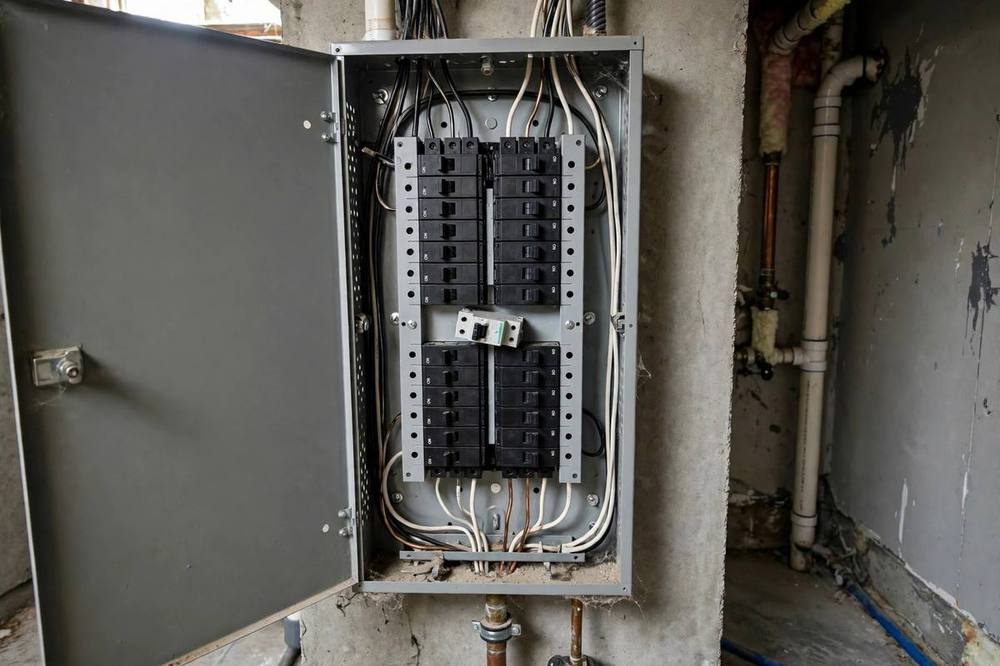
To reset a tripped furnace breaker safely, turn the breaker fully to OFF, wait 30 seconds, then flip it firmly to ON - and if it trips again within minutes, stop and call a technician. That sequence matters because a furnace breaker that trips is doing its job: it is cutting power before a wiring fault, a failing blower motor, or an overloaded circuit turns into a fire risk. This guide walks Denver homeowners through the safe reset, the reasons breakers trip in our climate and housing stock, and the point where a DIY reset stops being the right call.
What a tripped furnace breaker actually means
A furnace breaker is a safety switch in your electrical panel that cuts power to the furnace circuit when current exceeds its rating or when it senses a short. Most Denver homes run the furnace on a dedicated 120-volt circuit at 15 or 20 amps, though larger electric furnaces and air handlers use a 240-volt double-pole breaker at 30 to 60 amps. When that breaker trips, it is not a nuisance - it is the panel telling you something downstream pulled more current than the wire can safely carry.
Breakers trip for two broad reasons. The first is a genuine overload: too much current drawn by a failing component. The second is a fault: a short circuit or ground fault somewhere in the furnace wiring, the disconnect, or the circuit itself. A one-time trip during a cold snap can be a fluke. A breaker that trips twice in a week is a signal, not an accident.
If you are not sure whether the problem is electrical or mechanical, we handles both sides of that call under one roof as a full-service Denver HVAC company, which means you are not bounced between an electrician and an HVAC contractor while the house gets cold.
How do I reset a tripped furnace breaker in Denver?
Resetting a tripped furnace breaker in Denver follows the same safe sequence anywhere in the city: identify the correct breaker, switch it fully OFF, wait, then switch it firmly ON and watch what happens. The steps below are the ones we walk homeowners through on the phone before we ever roll a truck.
- Turn the thermostat to OFF and fan to AUTO. You do not want the furnace trying to fire while you are working at the panel.
- Find the furnace breaker. Open the panel cover and look for a breaker labeled FURNACE, HVAC, or AIR HANDLER. If the panel is unlabeled, a 15 or 20 amp single-pole breaker is the usual candidate for a gas furnace; a 240-volt double-pole breaker feeds electric heat.
- Look for the tripped position. Most breakers sit in the middle when tripped - not fully OFF, not fully ON. That middle position is the tell.
- Push it fully to OFF. This resets the internal mechanism. Do not just nudge it back toward ON.
- Wait 30 seconds. This lets the breaker cool and clears any residual load.
- Flip it firmly to ON. A solid, single motion. If it feels spongy or will not stay, stop.
- Restore the thermostat and listen. You should hear the inducer motor start within a minute or two on a gas furnace.
If the breaker holds and the furnace runs, you are likely dealing with a one-time event - a cold-morning overload, a brief power surge, or a blower that labored harder than usual. If it trips again within minutes or hours, the reset did not fix anything; it just postponed the diagnosis.
Why does my furnace breaker keep tripping in Denver CO?
A furnace breaker that keeps tripping in Denver CO almost always points to one of a handful of causes, and the age and wiring of local housing stock narrows the list fast. Here is what we find most often when we open a panel in a Denver home.
A failing blower motor
The blower motor is the biggest current draw on most furnace circuits. As bearings wear, the motor pulls more amps to spin the same wheel. A motor rated at 6 amps that starts drawing 11 on a 15-amp circuit will trip the breaker on every heat cycle. This is the single most common cause we diagnose in furnaces older than 12 to 15 years.
A shorted or grounded wire
Rodent damage, vibration, and heat cycling wear through wire insulation inside the furnace cabinet or the disconnect box. A bare wire touching metal creates a ground fault that trips the breaker instantly - often the moment the thermostat calls for heat.
An undersized or aging breaker
Breakers wear out. A 20-year-old breaker in a panel that has been through hundreds of trips can start tripping at lower current than its rating. Loose lugs at the breaker terminals also create resistance and heat, which mimics an overload.
Dirty filters and restricted airflow
A clogged filter forces the blower to work harder, which raises amp draw. In Denver, where we run furnaces hard from October through April, a filter that should be changed every 60 to 90 days often goes six months. That alone can push a marginal circuit over the edge.
If you are seeing repeated trips alongside short cycling or a blower that runs but never heats, our furnace repair Denver CO service can trace the circuit and the mechanical side in one visit rather than guessing at which is at fault.
Common mistakes and what to watch out for
The most common mistake homeowners make with a tripped furnace breaker is resetting it repeatedly without asking why it tripped. Each reset is a test of a fault that has not been fixed. Here is what to avoid.
- Never hold a breaker in the ON position. If it will not stay on, the circuit is faulted. Forcing it is how panels melt and fires start.
- Do not swap in a larger breaker. A 30-amp breaker on a 20-amp wire does not fix an overload - it removes the protection and lets the wire overheat inside the wall.
- Do not reset a breaker you cannot identify. If the panel is unlabeled and you are guessing, call us. Guessing at a 240-volt double-pole breaker is not a homeowner task.
- Do not ignore a burning smell or scorch marks. A hot plastic smell at the panel or a discolored breaker means the problem is already past the reset stage.
- Do not reset a breaker with wet hands or on a wet floor. Sounds obvious. We still hear about it every winter.
One more: a breaker that trips only when the furnace first starts, then holds, is often a sign of a failing capacitor or a blower starting against high static pressure. That is a mechanical diagnosis, not an electrical one, and it will not show up on a multimeter at the panel.
Denver furnace electrical problems we see most
Denver furnace electrical problems tend to cluster around the age of the housing and the way our winters stress a heating system. In older neighborhoods - the brick bungalows and post-war homes in furnace maintenance Denver CO territory like Baker, Athmar Park, and Globeville - we routinely find 60-amp panels that were never upgraded when a modern furnace and central AC were added. The furnace circuit shares capacity it was never designed to share, and the breaker trips under load.
In newer construction out east and in the suburbs, the issue is usually the opposite: a correctly sized panel but a furnace installed with a marginal blower motor or a return duct that is too small for the square footage. Restricted return air raises static pressure, the blower pulls more amps, and the breaker trips on the coldest nights of the year - which in Denver means the single-digit stretches in January and February.
We also see a spike in calls after the first hard freeze each fall, when a furnace that sat idle since April fires up for the first time with a blower that has been quietly seizing all summer. A fall tune-up catches that before it becomes a 2 a.m. no-heat call.
When to call a professional
Call a professional if the breaker trips twice in 30 days, if it will not reset at all, if you smell burning at the panel, or if you cannot confidently identify the furnace breaker. Those four conditions cover the vast majority of cases where a DIY reset is the wrong move.
We carry the meters and the amp-clamp to read actual current draw at the blower, test the breaker under load, and check the wiring and disconnect for faults - the three things a homeowner cannot do with a flashlight and a reset. We find the cause, fix it, and confirm the circuit holds through a full heat cycle before we leave. If the furnace is old enough that repair no longer makes sense, we will tell you that plainly and walk you through furnace installation Denver CO options at a clear written scope.
For homeowners who want to stop the cycle before it starts, our HVAC maintenance plans Denver CO include an electrical check on the furnace circuit at every visit - amp draw, breaker condition, and terminal torque - so a marginal blower gets caught in October instead of January.
Frequently Asked Questions
How do I reset a tripped furnace breaker in Denver?
Turn the thermostat off, push the furnace breaker fully to OFF, wait 30 seconds, then flip it firmly to ON. If it trips again within minutes, stop resetting and call a technician - a repeat trip means the underlying fault is still there.
Why does my furnace breaker keep tripping in Denver CO?
The usual causes are a failing blower motor drawing excess amps, a shorted or grounded wire, a worn breaker, or restricted airflow from a clogged filter. In Denver's older homes, an undersized panel shared with a modern furnace is also common.
Is it safe to reset a furnace breaker in Denver?
Yes, if you can identify the correct breaker, your hands are dry, and you reset it once. It is not safe to reset a breaker that will not stay on, shows scorch marks, or smells like burning - those are signs of a fault that needs a technician.
Who do I call for furnace breaker issues in Denver?
Call a HVAC contractor who handles both the electrical and mechanical sides of the furnace. Lion Tech Home Services diagnoses furnace breaker trips across Denver and can be reached at (720) 806-7634.
What affects the cost of a furnace breaker repair in Denver?
What a breaker problem costs depends on the cause: a simple breaker or wiring repair is the smaller job, while a blower motor or control board is the bigger one. Panel upgrades, when needed, are quoted separately.
Get help with HVAC in Denver
If your furnace breaker has tripped more than once, we can trace the cause and get the heat back on. Call Lion Tech Home Services at (720) 806-7634 and we will send a technician who can read the circuit, test the blower, and fix the problem at the source.