Heat Pump vs Furnace in Denver: Which Is Better?
Heat pump vs furnace in Denver: which is better? Compare cold-climate performance, altitude sizing, and Oct/Nov 2026 market replacement ranges.
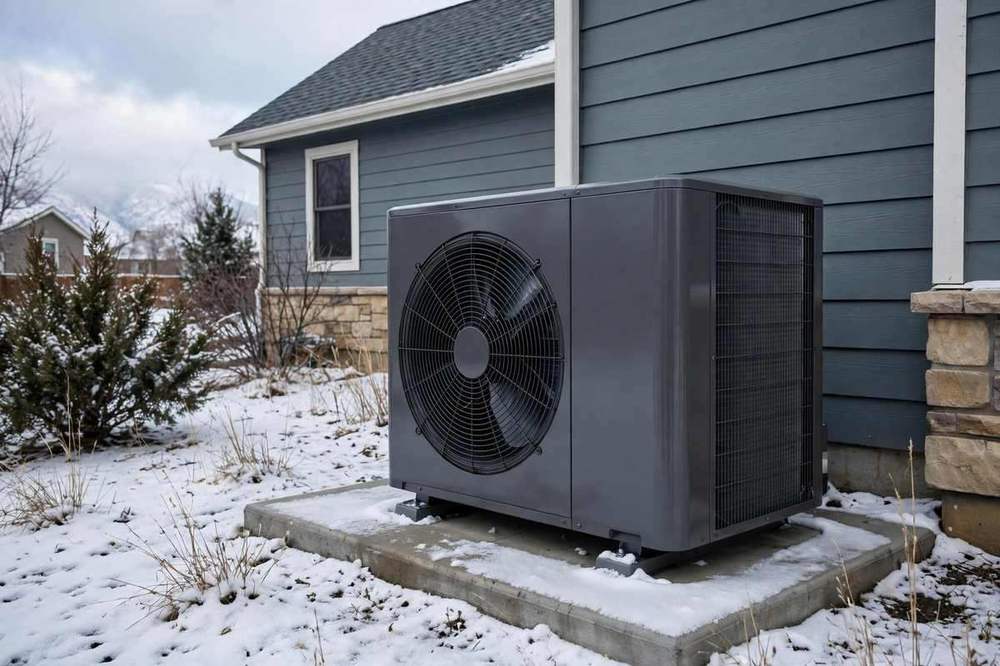
For most Denver homes, a cold-climate heat pump is the better long-term choice - it heats and cools from one unit, runs at roughly 200% to 300% efficiency in our climate, and cuts winter gas bills. A high-efficiency furnace is still better if your budget is tight, your ductwork is undersized, or you want the lowest possible upfront cost. That is the honest answer to heat pump vs furnace in Denver which is better, and the rest of this post is the math behind it.
We install both systems across the metro, so we have no reason to push one over the other. What we do have is a decade of service calls that tell us exactly where each system wins in Denver's 5,280-foot air and single-digit January nights.
The short answer for Denver homeowners
Heat pump vs furnace Denver comes down to three variables: how long you plan to stay, what your ducts look like, and whether you want one system or two. A heat pump is a single electric unit that moves heat instead of making it, so it handles both heating and cooling. A furnace burns natural gas to make heat and needs a separate AC for summer.
Heat pump vs furnace in Denver CO which is better depends on your house, not the brochure. Here is how the two stack up in real Denver conditions:
- Upfront cost: Furnace wins. As Oct/Nov 2026 market data (not this business’s prices), a standard furnace replacement runs roughly $3,800 to $8,650, a high-efficiency two-stage furnace roughly $7,500 to $11,200, and a cold-climate heat pump alone roughly $6,000 to $14,000.
- Monthly operating cost: Heat pump wins in most Denver homes, especially with Xcel's time-of-use rates.
- Summer cooling: Heat pump wins - it replaces your AC entirely.
- Lifespan: Roughly even. Both average 15 to 20 years with annual maintenance.
- Cold-weather performance: Modern cold-climate heat pumps hold rated capacity down to 5°F. Below that, they lean on backup heat strips.
If you are replacing a furnace and AC at the same time, the heat pump math gets very close. If you are replacing a furnace only, the furnace usually wins on price.
How much does a heat pump vs furnace cost in Denver CO?
Oct/Nov 2026 market ranges for the Denver area (market data, not this business’s prices): a standard furnace replacement roughly $3,800 to $8,650, a high-efficiency two-stage furnace roughly $7,500 to $11,200, and a cold-climate heat pump alone roughly $6,000 to $14,000. A heat pump paired with a new furnace runs roughly $21,000 to $28,000 gross in the same market data. Those ranges assume existing ductwork in usable condition and a standard 2,000 to 2,500 square foot home.
Here is what drives the number on each side:
Furnace cost factors
- AFUE rating - 80% units are cheapest, 96%+ condensing units cost more and need different venting
- BTU size - 60,000 BTU vs 100,000 BTU changes the equipment size and the venting
- Venting - a PVC sidewall vent for a condensing furnace adds cost if you do not already have one
- Ductwork repairs - extra work if we find crushed or disconnected runs
Heat pump cost factors
- Cold-climate rating - standard heat pumps cost less but lose capacity below 20°F; inverter-driven cold-climate models cost more
- Electrical - a 240V circuit and disconnect adds cost where the panel has no spare capacity
- Line set and pad - extra work for a new outdoor location
- Incentives - heat-pump incentive programs change often, so check the current program rules before you buy; do not count on a figure from an older article
We quote both options side by side so you can see the real five-year number, not just the sticker. If you want to see how we handle the install side, our heat pump installation Denver CO page walks through the process start to finish.
Efficiency of heat pump vs furnace in Denver
Efficiency of heat pump vs furnace in Denver is not a fair fight, because the two systems are measured on different scales. A furnace is rated by AFUE - how much of the gas it burns becomes heat. A heat pump is rated by HSPF2 and COP - how much heat it moves per unit of electricity.
A 96% AFUE furnace turns 96 cents of every gas dollar into heat. That is the ceiling. A cold-climate heat pump at 30°F runs a COP of about 2.5, meaning it delivers 2.5 units of heat per unit of electricity. Even accounting for Colorado's gas-versus-electric price gap, that usually translates to 30% to 50% lower heating cost in a Denver home.
Two Denver-specific factors matter here:
- Altitude. At 5,280 feet, gas furnaces lose roughly 4% of their rated capacity per 1,000 feet of elevation. A 100,000 BTU furnace at sea level behaves like a 92,000 BTU unit in Denver. Heat pumps do not lose capacity to altitude the same way.
- Dry air. Our low humidity means heat pumps defrost less often than in humid climates, which protects efficiency through the winter.
If you are also thinking about cooling, remember that a heat pump replaces your AC. That is where the efficiency story gets lopsided - one system, one maintenance plan, one lifespan.
Do heat pumps work in Denver winters?
Yes. Cold-climate heat pumps work in Denver winters and hold full rated heating capacity down to about 5°F, with continued operation below that using backup heat. Denver's design heating temperature is 2°F, and our record low is -25°F, so the honest answer is that a heat pump needs a backup heat source for the handful of nights that drop below zero.
That backup is usually electric resistance strips built into the air handler. They are cheap to install and expensive to run, so we size them to cover only the gap - typically 5 to 15 kW on a Denver home. On a normal January week, they run for a few hours total.
What actually kills heat pump performance in Denver is not the cold. It is these three things:
- Oversized equipment. A heat pump that short-cycles never reaches steady-state efficiency.
- Leaky ducts. Losing 25% of your heat to an attic is a problem regardless of what makes the heat.
- Bad defrost controls. Cheap units ice up and stay iced up. Cold-climate models handle this properly.
We see a lot of this in older Denver neighborhoods. In residential HVAC Denver work around Virginia Village and similar mid-century pockets, the ducts were sized for a furnace and a small AC - not for a heat pump moving 1,200 CFM. That is fixable, but it has to be part of the plan.
Which is more efficient in Denver: heat pump or furnace?
The heat pump is more efficient in Denver by every measure except upfront cost. It delivers more heat per dollar of energy, it cools your house in July, and it does not burn anything inside your home.
But efficiency is not the same as savings. For a typical 2,200 square foot Denver home with average insulation, the pattern looks like this:
- Furnace + AC: heating and cooling energy use depends on insulation, thermostat habits, and how cold the winter runs
- Cold-climate heat pump: usually lower annual energy use than a furnace plus AC in the same house, depending on setbacks and how the system is set up
- Break-even: depends on the house and the systems being replaced — run the numbers for your home before deciding
If you are only replacing a furnace and your AC has five good years left, the break-even stretches to 12 years or more. Run the numbers for your house before you commit.
Common mistakes we see on Denver heating replacements
The most expensive mistakes on Denver heating replacements happen before the equipment shows up - in sizing, duct evaluation, and rebate paperwork. Here is what we run into most often.
Sizing by square footage
Square footage tells you almost nothing. We need a Manual J load calculation that accounts for your window U-value, insulation R-value, ceiling height, and orientation. A south-facing ranch in Washington Park and a north-facing two-story in Park Hill can have the same square footage and a 40% difference in heat load.
Skipping the duct assessment
Heat pumps move more air than furnaces at lower temperature rise. If your ducts are undersized, the system will run hot, short-cycle, and never hit rated efficiency. We measure static pressure and airflow before we quote.
Ignoring the electrical panel
A heat pump needs a dedicated 240V circuit. Some older Denver homes still have 100-amp panels with no spare capacity. Upgrading the panel adds cost and needs to be in the budget from day one.
Missing an incentive you could have claimed
Federal, state, and utility heat-pump incentives change often and have their own rules and deadlines. Check the current program terms before you buy, and ask what paperwork the installer handles.
If you are also dealing with airflow problems, our duct sealing Denver CO service often pays for itself in the first heating season by recovering the capacity you already paid for.
When to call a professional
Call a professional when your furnace is over 15 years old, when your repair quote exceeds 30% of replacement cost, or when you are trying to decide between a heat pump and a furnace and want real numbers instead of a sales pitch. Those are the three situations where a proper load calculation and duct assessment change the answer.
At Lion Tech Home Services, we run the Manual J, measure your ducts, and quote both systems side by side. You get the five-year cost of each option in writing before you decide. No pressure, no upsell - just the math for your house.
We also handle the full range of furnace installation Denver CO work, so if the numbers point to a furnace, we are not going to talk you out of it.
Frequently Asked Questions
Is a heat pump or furnace better in Denver?
A cold-climate heat pump is better for most Denver homes because it heats and cools from one unit and cuts annual energy costs by 25% to 40%. A furnace is better when upfront budget is the priority or your ducts cannot handle heat pump airflow. Both work well here.
How much does a heat pump vs furnace cost in Denver CO?
As Oct/Nov 2026 market data (not this business’s prices), a standard furnace replacement runs roughly $3,800 to $8,650, a high-efficiency two-stage furnace roughly $7,500 to $11,200, and a cold-climate heat pump alone roughly $6,000 to $14,000. The gap narrows a lot if you were replacing an AC too.
Do heat pumps work in Denver winters?
Yes. Cold-climate heat pumps hold full rated capacity down to about 5°F and keep running below that with backup heat strips. Denver's design temperature is 2°F, so a properly sized system with backup covers every night of the year without issue.
Which is more efficient in Denver: heat pump or furnace?
The heat pump is more efficient. A 96% AFUE furnace is near the practical ceiling for gas. A cold-climate heat pump runs a COP of 2.0 to 3.0 across Denver's winter temperature range, delivering two to three units of heat per unit of electricity.
Can I keep my furnace and add a heat pump?
Yes - that is a dual-fuel setup, and it is popular in Denver. The heat pump handles most of the winter, and the furnace takes over below its balance point, usually around 25°F to 30°F. You get heat pump efficiency with furnace backup for the coldest nights.
Get help with Hvac in Denver
Whether the numbers point to a heat pump, a furnace, or a dual-fuel setup, we will size it right and install it clean. Call Lion Tech Home Services at (720) 806-7634 and we will run the load calculation for your Denver home.
One visit, one honest quote, both options on paper. That is how we do heating in Denver.